
Astronauts
Craft, AI, and the people still exploring.

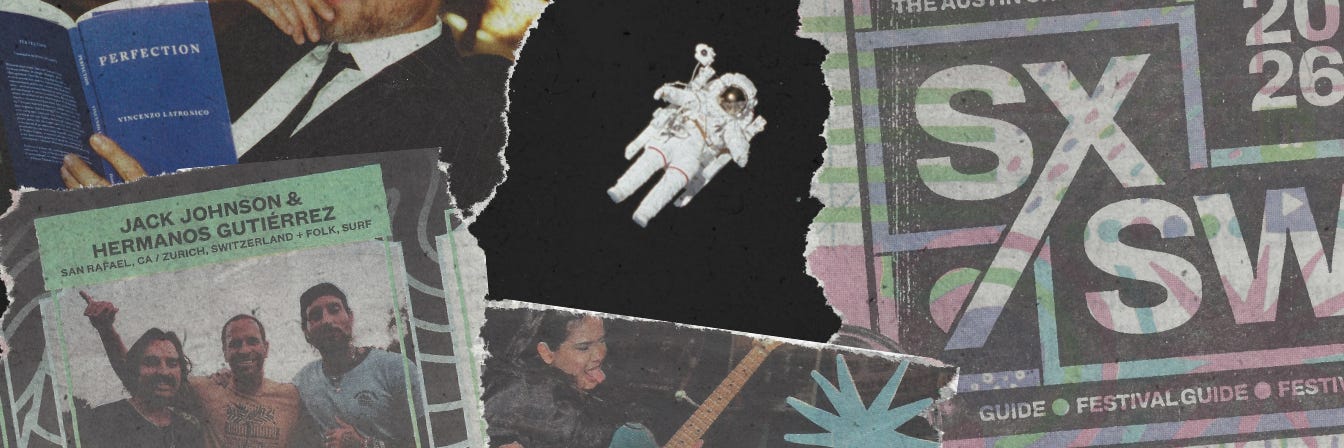
Tom Sachs is talking about recreating a mission to Mars to a packed crowd of conference attendees. It’s not the typical talk for a main-stage presentation at South by Southwest — scale model recreations, pseudo-propaganda, the artist pictured in a mostly functional space suit. He’s flipping through photos with his iPad mirrored to massive screens at his own insistence. It’s all an extension of Sachs’ curiosity about the U.S. space program through the lens of bricolage: scrappy, unexpected, whimsically rough around the edges. His work, and how he presents it, is full of assemblage, hand drawing, and character. It’s hard to tell if the audience knows what to make of it.
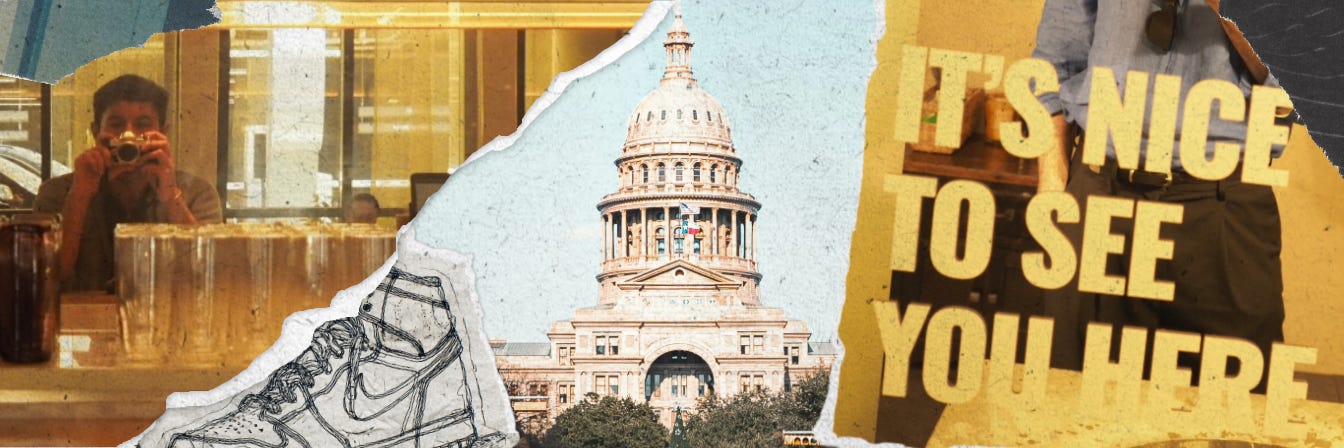
It’s my third time covering SXSW for work. I’m there to find the through lines for brand marketers, turning days of panels, interactive experiences, and conversations into what (I think) will be the biggest themes shaping the next year in advertising. The product will be a report of tidy trends, expert quotes, and brand-safe guidance. I’m normally focused on the conference, but I always try to give readers a taste of what makes SXSW distinct from other big industry events: far-reaching visions of the future, wisdom from unexpected subjects, and the energy of art, design, music, and film alongside typical industry topics. 2026 was the first year I asked for a Platinum pass, which grants access to all programming — I wanted to actually see what was happening in Austin outside of the sessions, not just gesture at its existence.
With much more freedom to choose where I went, I found myself drawn to the more creative side. I took physical notes, brought my Olympus E-M10 for quick snaps, and tried to shape my thoughts as I went instead of waiting to review everything back at home. I saw the premiere of Jack Johnson’s “Surfilmusic,” followed by a panel with the singer and his friends. I listened to independent creators talking about sharing their process, raw and imperfect. Established design-world leaders like Tom Sachs and TBWA’s Greg Greenberg showed a crowd of visitors the magic of physical art, movement, and light. What they had in common was a willingness to go somewhere on their own, to explore — slowly, searching, by hand, on their terms.
Most of the conference sessions were making a different argument — some in the same room where Sachs’ keynote was held. Bragging about brand stickiness, recycling content, and trimming production cycles felt expected but more dystopian this year. Do I really need an AI avatar that curates a perfect playlist of reality TV clips? Big brands taking a stance against AI in marketing have yet to prove whether the pendulum is swinging back or if “anti-AI” is just another campaign. Most marketing leaders still seem sold on AI solving as many problems as they can find.
AI makes incredible things possible. It also lets you mistake a shortcut for work — leaping past the labor and thoughtfulness of creativity straight to the dopamine hit of engagement. The illusion of good.
These tools make art accessible, but does that include otherwise able people who simply don’t want to do the work? A wave of self-identified creatives is producing vacuous portfolios where scale trumps grit and perspective. Maybe, in another time, these people just don’t have what it takes; maybe the world they work in never calls them to the open horizon of originality; maybe creativity just means something different now; maybe all of the above.
Early in my trip, at Johnson’s premiere, something crystallized. It was the people really making things — physical, messy, elemental — that excited me. Everything else felt mundane or unsettling. What Johnson made was a love letter to play and creativity. Surfing, filmmaking, music — all with the common theme, as Johnson said himself, of his friends. Fun, light, free. Full of childlike wonder and appreciation. Art that explores and feels through the many moments of our lives.
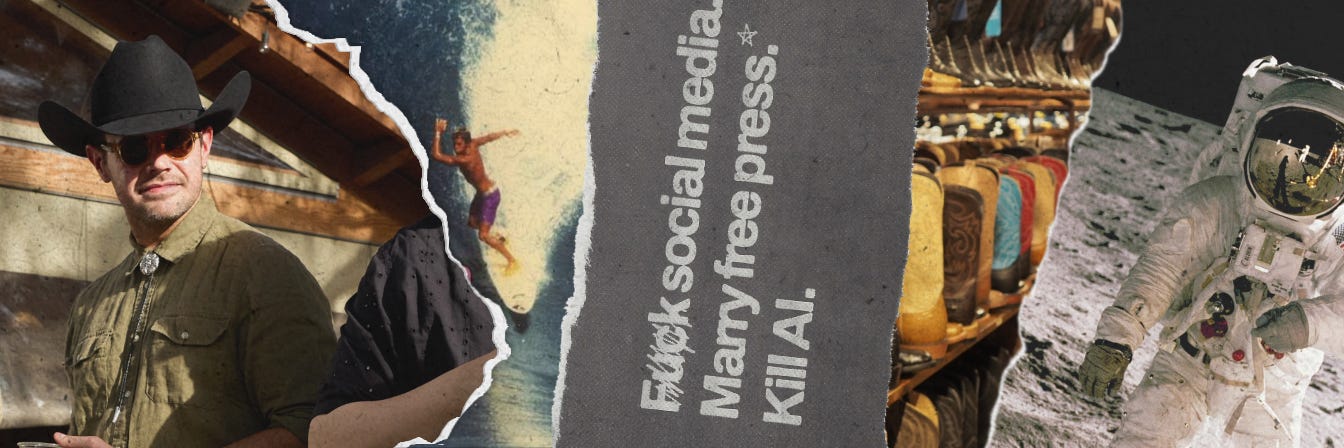
I’ve been drawing my whole life. I learned by copying things that spoke to me, slowly building and figuring out my own style. I studied graphic design in college as a commercial extension of my art, but I often made the most meaningful work when I put time into the physical aspects: hand-drawing, assembly, the delicate work of mounting work on boards for final critiques. One of my proudest moments in undergrad was a giant hanging kimono made of hand-stained and textured paper pulp, dried in the sun over days of careful watching.
Many of the artists and designers I learned about in art history classes made their mark in advertising, turning sketchy drafts and lightning-flash ideas into iconic works. Paula Scher’s five-minute sketch that would become the Citi logo. Andy Warhol’s early-career shoe illustrations for the New York Times. The advertising canon is full of ingenuity, brilliance, and craft. Those ideas still happen, but it feels rarer. Priorities are different.
I worked on the report on the flight to New York. Back in the office, I spent a few days compiling my thoughts, handed them over to a designer, and made a respectable 12-page PDF to be sent off to the clients. I haven’t stopped thinking about the way I felt, though, and how I would share that. How a report that felt more like me might be different from what my job asked for. How I might write about the tension that goes beyond advertising and brand marketing to the heart of what I miss about creativity itself, and how badly I want to get back to it.